Legally, if you take a position in federal court on X (i.e., that it's okay to ban external transactions by apps using your app store), and you are found to be doing not-X in an analogous situation (i.e., setting up external transactions to avoid fees in your competitors' app store), the court can rule against you in the original case...and then sanction you and your lawyers for wasting the court's time proclaiming X...and then legally bar you from asserting X in those proceedings, or related proceedings.
Courts are generally okay with some form of alternative arguments, (i.e., I didn't do Y, but if I did Y it was legal for me to do so), but they absolutely will not accept contradictory arguments by the same party (It's okay for me to do Z but I won't allow others to do Z in the same situation).
Obviously if Apple owns one platform, and Google owns the other platform, it is not actually the same situation.
The law does not require that Google and Apple run their online stores the same way, or that Apple interact with Google's store the same way they choose to run their own store.
In fact it's arguable that a free marketplace encourages and depends on different companies taking different approaches to meet customer demands.
This doesn't sound right, so let me try to form an example to get at what is the issue I'm seeing.
Let X be "It is okay for me to ban my customers from using discounts."
Let not X be "It is okay for me to use discounts offered by another restaurant."
This doesn't feel like a particularly contradictory situation.
Maybe the issue is that we skipped a few too many steps, because there isn't anything particularly illegal about Apple only letting apps doing certain things (like not bypassing their store) onto their store. The issue is that this is occurring in a larger situation where there are concerns about being a monopoly. I wonder if we build out exactly why what Apple is doing might be wrong (basically the argument they are having to defend against by claiming X is okay) we can see it isn't an issue. But at face value it feels to be taking a very broad view of what constitutes hypocritical behavior to the point it renders the notion useless.
Apple Music is in the same position as say Spotify on Google's platform as a third party media service. Is the implication that they should operate differently or be held to a different standard than Spotify?
I don't believe Apple has argued that collecting alternate payments in-app would be an undesirable for third party developers on the App Store - just that they don't wish to support it (for multiple reasons).
This also comes from Apple and Google having different starting points in their mobile platform - Apple already had a huge account and micropayment billing base for the iPhone by basing the App Store on the iTunes Store.
Can you link to something that goes into more details about this principle, or give us some search terms? Stated as broadly as you have done, it doesn't sound right to me.
This does not fit with my understanding of estoppel (I am a lawyer).
There are specific rules that apply to the different types of estoppel, and they would not be met where Apple is dealing with app developers pursuant to the App Store dev agreement in one case and dealing with Google under the Google Play TOS in the other case.
It might be relevant if Apple claimed that Google is acting as a monopolist by engaging in XYZ behavior, but Apple’s lawyers are smart enough not to make such an argument.
It's very relevant to note that Google Play's terms around in-app billing[1] are far more liberal than Apple's.
> Developers offering products within a game downloaded on Google Play or providing access to game content must use Google Play In-app Billing as the method of payment.
Developers offering products within another category of app downloaded on Google Play must use Google Play In-app Billing as the method of payment, except for the following cases:
> Payment is solely for physical products
> Payment is for digital content that may be consumed outside of the app itself (e.g. songs that can be played on other music players).
That second note is critical here and the example quite literally describes the exact situation here as an exemption.
First of all, my stance here is that Google is pretty reasonable with their guidelines compared to Apple.
My biggest issue in the iOS vs Android debate is that apple is behaving monopolistically and Google isn't. Using the respective app stores give publishers an inherent audience to distribute/sell content through. I don't think it's unreasonable for Apple/Google to try to profit off of the audience they've built. Where I have an issue is that if you don't want to sell on the Play Store, you don't have to. You can install APKs from anywhere and there are even alternative app stores that are completely within Google's ToS. With Apple, you have to sell on the app store or not at all (I know Enterprise apps exist, but it's not the same).
I think Apple gets away with this because they're not selling digital content, they're selling a service/subscription.
One thing that drives me up a wall about Apple is that you cannot purchase a Kindle book in-app on an iOS device. So if you're in the kindle app and want to buy a book you need to actually go and check out on a web browser (true for both the Amazon app and the Kindle app). On Android, you can do whatever you want.
I'm pretty sure that Apple is going to lose this one. We need an open, fair ecosystem for publishing apps.
But it says "on other music players". It doesn't really specify, but I would say that "Spotify" is the music player, and you still need to use it whether it is on the browser or other platform, but it is still "the same music player". I guess that the second case is more related to buying digital content, say an image, music, video, where you get the actual right to use that image, music, video on any platform. But I could be wrong.
In any case, as other users mentioned, if Apple music really lets ANY developer create an application that may reproduce the purchased content, then it may look fine.
I'm interested in whether allowing Google Play In-app Billing is sufficient to meet the requirements (while also allowing external payment), or if the requirements are supposed to mandate Google Play In-app Billing as the sole possible method of payment. It's not clear from the policy page.
Also note that Google allows third-party payment gateways via the Google Play API – Netflix, as an example, dodges the cut with a custom implementation of Stripe! It's a lot more work to implement, but developers actually have the option.
I really don't understand why people are defending Apple on this. It seems shameful of a $1.5 trillion company to do this to developers. Even more so when they themselves don't abide by their philosophy. They are extracting out a competitive advantage from this on other services like Spotify or Netflix( even without this they have a big one at app discovery and pre installs on iOS). Kudos to Google for allowing the developer to choose the app store/payment method.
Are you guys really fine with living in a world where one/two companies own everything you consume? This sounds like an antithesis to the hacker culture I would associate at least HN crowd with.
People keep writing about businesses like they are surprised they aren't moral entities with consistent moral logic. Businesses take whatever action or position they can to maximize their results. The more power the business has, the more they can leverage that power to get what they want. This should just be the default assumption at this point and we should talk about if that is ok for society, not keep feigning surprise at the offense of the day.
This faulty logic is deeply ironic, since it's an expression of irrational negative emotion, which is what it's accusing others of. It's so common and so unchanging, I can paste an old comment I wrote about it (just substitute "corporations" for "wealthy and powerful people"):
The "why are people surprised" line is a huge red flag for me that a person is not arguing in good faith. Accusing people of being "surprised" as an implication of naivete seems to be a very common tool of redirection when people are defending something perceived by others to be immoral or otherwise harmful. I'm not sure why such a particular angle became so common, since it seems so obvious to me that what they are calling "surprise" is indignation/anger. It seems to be exaggerated from the general notion that the stronger a reaction is, the newer it is, but obviously that's faulty. I may hear the same story of wealthy and powerful people behaving badly every day, but it doesn't make the behavior any more acceptable with each occurrence, and so my anger does not subside, no matter how un-surprised I am.
Apple does not present the 30% cut as a machiavellian reality of business. They describe it as a fair, reasonable, and mutually beneficial practice. Apple’s practices on the Google play store suggests that they are arguing in bad faith.
"People can be moral but businesses are amoral" is not the right summary. Businesses (and governments) are composed of many people, and there's no reason to expect in general that the actions of such a collective are consistent in any sense, not just a moral sense. Businesses and governments frequently undertake sets of actions that cannot even be reconciled as pursuing a consistent set of selfish preferences.
> This should just be the default assumption at this point and we should talk about if that is ok for society, not keep feigning surprise at the offense of the day.
This is almost good, but doesn't take into account the fact that everything is equally like this. The sociology professor who constantly tweets about racial hatred makes their job more prominent. The president who tweets about the Chinese virus engages their base.
It's not just some businesses, because that behaviour of businesses is driven by the fact they're run by people. It's just how some people behave.
The faulty logic is people proclaiming businesses as a single entity and not made up of a multitude of people with varying moral standards and opinions. We shouldn't be surprised that businesses aren't morally consistent when the people in them sure won't be.
Indeed they are compelled to maximise profit (the business leadership), else the shareholders will replace them. In fact I believe there’s even a US law to this effect.
Boycott WWDC everyone. Trillion Dollar companies don't play by the fair rules.
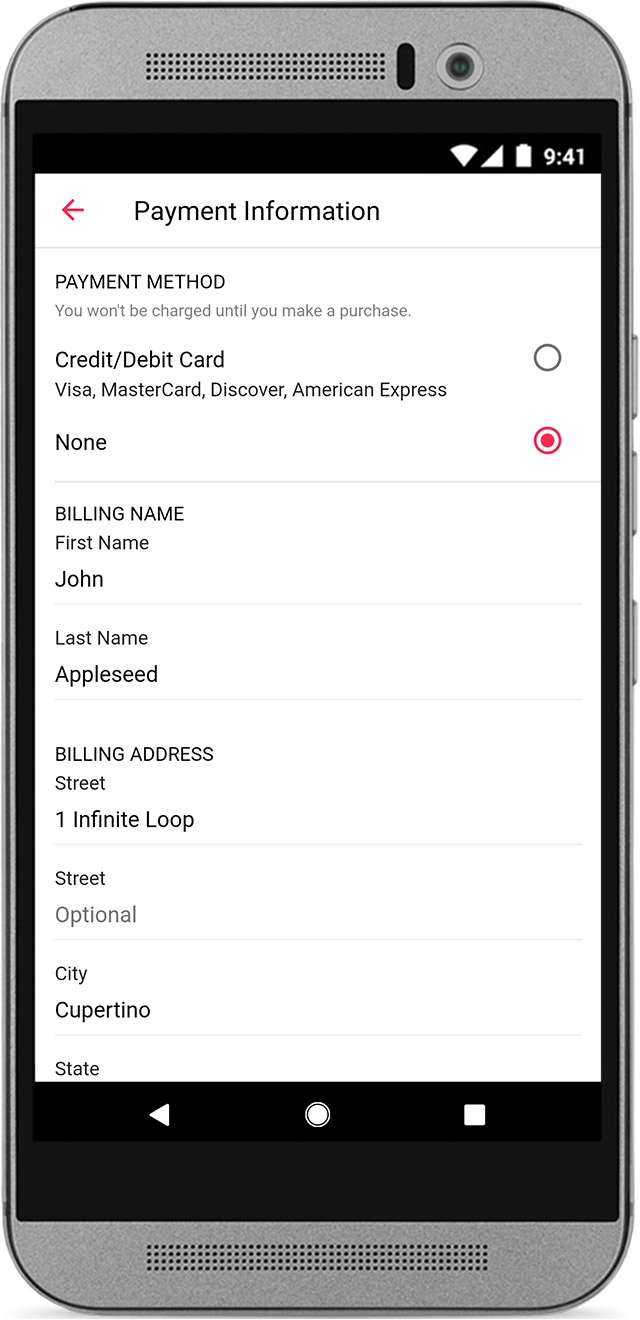
Apple Music on Android requires its own payment details to avoid Google Play's 30% cut. Apple has accused Match, Epic, and Spotify of wanting a 'free ride' while taking one themselves.
Slight thread hijack. I believe Apple deserves all the developer backlash it's currently receiving, I hope it helps them turn themselves around. I say that as someone who actually enjoys using and developing for the platform(s). What would it take to get them to take notice of these issues? Mass app store strike? Can a sizable group of developers push app store updates with a blank screen and some demands laid out? It doesn't (and won't) even need to get past app store review for someone to take notice, get some high profile players on board who have a beef with Apple already (Basecamp, Spotify)... Or pull their apps altogether?
Given the strong emotions around the topic, I've been a bit afraid to ask this question - is what Apple does really that different than traditional retail? In FMCG there are difficult hurdles to jump over to get on the store shelves. The stores don't have an obligation to put anyone's product on the shelf. They can also module what the cut of the revenue is. I'm not sure I have an opinion on what Apple is doing, but isn't it worth asking if it's really that unique in the economy? I welcome feedback on if I have a major blind spot here.
I think the difference here is that Apple is the only retailer for someone to install an app onto an iOS device. It prohibits anyone else from setting up a retailer, through policy-based (not technical) restrictions.
You cannot install an app on an iOS device, except from their store. Apple won't let you install an alternative store. Therefore their app store is a monopoly store, and should be regulated as such. (Is the argument being levelled against them.)
There are multiple things retail does. Discovery and sales is one of it, but no one does what Apple wants to do with IAP.
Imagine that you buy a DVD player at Best Buy. That's cool. Best Buy decides the markup, where it puts it, how much it puts in promoting it, etc. That's also cool. You are OK with giving the with 30 % of your DVD player sales. After all, shelf space, promotion, etc. isn't free.
Now, imagine Best Buy hears that you sell DVDs by mail. People are already buying your DVDs and you are shipping it to their door, so you don't feel that it's worth your time and effort to "sell" them through Best Buy.
Best Buy is not happy with this. They say that for ANY DVD for the DVD player in their store, NEED to offered in their store AND you need to pay the same fee for which you get placement, promotion, etc.
You don't want to sell your "Mail in DVDs" in Best Buys, you don't want or need them promoting your DVD, they will never touch, manage, offer support, etc. for these "Mail in DVDs", but you HAVE to sell them in Best Buy because if you don't, then they will just stop selling your DVD player.
In short, they are in the business of selling DVD players, but want a cut of all "Mail in DVDs" because your customers bought the DVD player through them.
This is what Apple wants to do for any app that offers digital content / experiences that might not want to use their services. How is that OK?
It's not unique in the economy; it's not even unique in the software economy: video game consoles have the business model that they sell the hardware and make money by having a monopoly on the software that runs on them.
The questions are, do we want phones to be like video game consoles with a walled-garden marketplace, or like general purpose computers where the manufacturer does not exert control over the entire software economy. There are arguments for both, but I think the former stifles innovation.
For the retail analogy to work, it would be like if Best Buy suddenly told Microsoft that because their Xbox allows people to subscribe to Xbox Live, Best Buy must get a cut of that subscription for every Xbox that's purchased in their stores.
A screenshot and an indignation comment (https://news.ycombinator.com/item?id=23564731) are poor initial conditions for a thread, but this thread seems to be doing well despite that, so I don't think we need to demote this submission, but it would be better to find an article to change the URL to.
Honestly this seems like an irrelevant counterargument.
Google sets its own policies for its own app store. If Google approved this, all it means is Google approved it.
Apple similarly sets its own policies for its own app store. It's totally free to set totally different policies, and disapprove of things that Google approves.
I still think Apple's policies have huge problems, but this particular example is apples and oranges, unfortunately.
The rich irony of this being that Apple has been cracking down on this behavior in the App Store. There was just a segment on it this morning on CNBC from the BaseCamp founder.
I'm really having a hard time wrapping my head around why this is such a huge deal to people. Opinions are fine, everyone can have one but I always see Apple's payment options as a massive win as a consumer.
1. Subscriptions are easily monitored from a single page.
2. Before subscriptions renew I get emailed, not all services do this, shame on those that do not and a magic renewal transaction goes through without notifying you first
3. Trusting a single entity (Apple) with payment is easier for me to stomach than giving my credit card info to a dozen or more different sites/services manually
4. The user experience is vastly better using Apple's solution than having to enter all of my billing info by hand each time or with Bitwarden even which can get things wrong often enough I always have to double check.
As a developer you gain the advantage of users being able to easily purchase, and users have a credit card assigned to their Apple ID making purchases incredibly easy. I'd argue, without proof anyway, that this probably results in purchases you'd never get otherwise due to how easy and seamless it is.
The 30% cut is a lot, but I think in general there are big benefits for users, maybe the developers don't see it that way, but as a user I would NEVER use something other than Apple's payment solution in the App Store. So if you're asking for that option and I seen you were charging more for it through Apple's solution and less through some other service I'd immediately not pay for your app. Simple as that. You'd basically lose me as a potential customer.
Google policy explicitly permits apps like Apple Music to charge for subscriptions outside the App Store and for them to not allow taking subscription payment through the App Store.
Apple has a similar policy for “Reader” apps on their own App Store for apps which are used to access content that you subscribe to, which Apple reasons that “Hey” does not qualify for. That’s why Spotify and Netflix don’t pay 30% to Apple for their subscribers.
So I find this “gotcha” wrong on two levels. First, it isn’t inconsistent because Apple and Google are perfectly free to set policies on their own stores, and secondly, in fact they have similar policies for music subscription apps on both stores.
If app makers find the Android policy preferable, more app makers will choose to develop for Android and their ecosystem could be better of for it. In fact it doesn’t work that way because due to a combination of demographics and possibly software usability factors, users spend about 50% more money on the Apple’s store than on Google’s.
In these discussions, the focus seems to be on the cost to Apple for providing App Store as a service (billing, fraud prevention, tax compliance, etc.). However, presumably there is a reasonable argument to make that developers should compensate Apple for creating iOS itself as a platform. There are many platform capabilities developers argue for as a fundamental right. Spotify has said Apple must make Siri extensible for voice control, others have wanted SPI to be API. All this work is meaningful investment, both financial and technical.
Are there proposals for a more incentive aligned business model for Apple as a platform provider? Would it make sense for Apple to, e.g., charge a percentage of all of Tile's hardware sales? After all, Apple dedicates resources to maintain the location and bluetooth APIs Tile depends on. Is it sufficient to say all these benefits must be capitalized into the cost of an iPhone purchase? But what about the customer who's overpaying for Tile's theoretical support who never uses the product itself? Maybe a better business model would lead to a world where there is less speculation ahead of WWDC: the developer's needs and Apple's finances are so aligned that we can guarantee the new support they're ready to announce!
Why are people still defending Apple even after all these obvious examples surfaced?
Spotify definitely explained it the best.
timetoplayfair.com
The current status quo needs to change, Apple and Google are duopols, and they need to be reeled in.
Imagine if you were a mobile developer and overnight Google accidentally banned you without reason. Your entire life is thrown upside down, and you don't have a way to fix it except accepting it like you aren't worth anything.

[+] [-] gamblor956|5 years ago|reply
Legally, if you take a position in federal court on X (i.e., that it's okay to ban external transactions by apps using your app store), and you are found to be doing not-X in an analogous situation (i.e., setting up external transactions to avoid fees in your competitors' app store), the court can rule against you in the original case...and then sanction you and your lawyers for wasting the court's time proclaiming X...and then legally bar you from asserting X in those proceedings, or related proceedings.
Courts are generally okay with some form of alternative arguments, (i.e., I didn't do Y, but if I did Y it was legal for me to do so), but they absolutely will not accept contradictory arguments by the same party (It's okay for me to do Z but I won't allow others to do Z in the same situation).
[+] [-] snowwrestler|5 years ago|reply
The law does not require that Google and Apple run their online stores the same way, or that Apple interact with Google's store the same way they choose to run their own store.
In fact it's arguable that a free marketplace encourages and depends on different companies taking different approaches to meet customer demands.
[+] [-] SkyBelow|5 years ago|reply
Let X be "It is okay for me to ban my customers from using discounts."
Let not X be "It is okay for me to use discounts offered by another restaurant."
This doesn't feel like a particularly contradictory situation.
Maybe the issue is that we skipped a few too many steps, because there isn't anything particularly illegal about Apple only letting apps doing certain things (like not bypassing their store) onto their store. The issue is that this is occurring in a larger situation where there are concerns about being a monopoly. I wonder if we build out exactly why what Apple is doing might be wrong (basically the argument they are having to defend against by claiming X is okay) we can see it isn't an issue. But at face value it feels to be taking a very broad view of what constitutes hypocritical behavior to the point it renders the notion useless.
[+] [-] dwaite|5 years ago|reply
Apple Music is in the same position as say Spotify on Google's platform as a third party media service. Is the implication that they should operate differently or be held to a different standard than Spotify?
I don't believe Apple has argued that collecting alternate payments in-app would be an undesirable for third party developers on the App Store - just that they don't wish to support it (for multiple reasons).
This also comes from Apple and Google having different starting points in their mobile platform - Apple already had a huge account and micropayment billing base for the iPhone by basing the App Store on the iTunes Store.
[+] [-] jessriedel|5 years ago|reply
[+] [-] fortran77|5 years ago|reply
[+] [-] jungletime|5 years ago|reply
Google banning Federalist from its ad network for having racist comments on its articles.
Google having plenty of racist comments on its own youtube, but still running ads on those videos.
[+] [-] gnicholas|5 years ago|reply
There are specific rules that apply to the different types of estoppel, and they would not be met where Apple is dealing with app developers pursuant to the App Store dev agreement in one case and dealing with Google under the Google Play TOS in the other case.
It might be relevant if Apple claimed that Google is acting as a monopolist by engaging in XYZ behavior, but Apple’s lawyers are smart enough not to make such an argument.
[+] [-] unknown|5 years ago|reply
[deleted]
[+] [-] cma|5 years ago|reply
[+] [-] spullara|5 years ago|reply
[+] [-] mmcclure|5 years ago|reply
> Developers offering products within a game downloaded on Google Play or providing access to game content must use Google Play In-app Billing as the method of payment. Developers offering products within another category of app downloaded on Google Play must use Google Play In-app Billing as the method of payment, except for the following cases:
> Payment is solely for physical products
> Payment is for digital content that may be consumed outside of the app itself (e.g. songs that can be played on other music players).
That second note is critical here and the example quite literally describes the exact situation here as an exemption.
[1]: https://play.google.com/about/monetization-ads/payments/
[+] [-] zachruss92|5 years ago|reply
My biggest issue in the iOS vs Android debate is that apple is behaving monopolistically and Google isn't. Using the respective app stores give publishers an inherent audience to distribute/sell content through. I don't think it's unreasonable for Apple/Google to try to profit off of the audience they've built. Where I have an issue is that if you don't want to sell on the Play Store, you don't have to. You can install APKs from anywhere and there are even alternative app stores that are completely within Google's ToS. With Apple, you have to sell on the app store or not at all (I know Enterprise apps exist, but it's not the same).
I think Apple gets away with this because they're not selling digital content, they're selling a service/subscription.
One thing that drives me up a wall about Apple is that you cannot purchase a Kindle book in-app on an iOS device. So if you're in the kindle app and want to buy a book you need to actually go and check out on a web browser (true for both the Amazon app and the Kindle app). On Android, you can do whatever you want.
I'm pretty sure that Apple is going to lose this one. We need an open, fair ecosystem for publishing apps.
[+] [-] jaimehrubiks|5 years ago|reply
In any case, as other users mentioned, if Apple music really lets ANY developer create an application that may reproduce the purchased content, then it may look fine.
[+] [-] thaumasiotes|5 years ago|reply
[+] [-] reagank|5 years ago|reply
[+] [-] owenwil|5 years ago|reply
[+] [-] actuator|5 years ago|reply
Are you guys really fine with living in a world where one/two companies own everything you consume? This sounds like an antithesis to the hacker culture I would associate at least HN crowd with.
[+] [-] tracerbulletx|5 years ago|reply
[+] [-] happytoexplain|5 years ago|reply
The "why are people surprised" line is a huge red flag for me that a person is not arguing in good faith. Accusing people of being "surprised" as an implication of naivete seems to be a very common tool of redirection when people are defending something perceived by others to be immoral or otherwise harmful. I'm not sure why such a particular angle became so common, since it seems so obvious to me that what they are calling "surprise" is indignation/anger. It seems to be exaggerated from the general notion that the stronger a reaction is, the newer it is, but obviously that's faulty. I may hear the same story of wealthy and powerful people behaving badly every day, but it doesn't make the behavior any more acceptable with each occurrence, and so my anger does not subside, no matter how un-surprised I am.
[+] [-] xnyan|5 years ago|reply
[+] [-] jessriedel|5 years ago|reply
[+] [-] robertlagrant|5 years ago|reply
This is almost good, but doesn't take into account the fact that everything is equally like this. The sociology professor who constantly tweets about racial hatred makes their job more prominent. The president who tweets about the Chinese virus engages their base.
It's not just some businesses, because that behaviour of businesses is driven by the fact they're run by people. It's just how some people behave.
[+] [-] Grimm1|5 years ago|reply
[+] [-] Synaesthesia|5 years ago|reply
[+] [-] rydre|5 years ago|reply
Apple Music on Android requires its own payment details to avoid Google Play's 30% cut. Apple has accused Match, Epic, and Spotify of wanting a 'free ride' while taking one themselves.
[+] [-] jamil7|5 years ago|reply
[+] [-] archildress|5 years ago|reply
[+] [-] g_p|5 years ago|reply
You cannot install an app on an iOS device, except from their store. Apple won't let you install an alternative store. Therefore their app store is a monopoly store, and should be regulated as such. (Is the argument being levelled against them.)
[+] [-] kyriee|5 years ago|reply
Imagine that you buy a DVD player at Best Buy. That's cool. Best Buy decides the markup, where it puts it, how much it puts in promoting it, etc. That's also cool. You are OK with giving the with 30 % of your DVD player sales. After all, shelf space, promotion, etc. isn't free.
Now, imagine Best Buy hears that you sell DVDs by mail. People are already buying your DVDs and you are shipping it to their door, so you don't feel that it's worth your time and effort to "sell" them through Best Buy.
Best Buy is not happy with this. They say that for ANY DVD for the DVD player in their store, NEED to offered in their store AND you need to pay the same fee for which you get placement, promotion, etc.
You don't want to sell your "Mail in DVDs" in Best Buys, you don't want or need them promoting your DVD, they will never touch, manage, offer support, etc. for these "Mail in DVDs", but you HAVE to sell them in Best Buy because if you don't, then they will just stop selling your DVD player.
In short, they are in the business of selling DVD players, but want a cut of all "Mail in DVDs" because your customers bought the DVD player through them.
This is what Apple wants to do for any app that offers digital content / experiences that might not want to use their services. How is that OK?
[+] [-] paulgb|5 years ago|reply
The questions are, do we want phones to be like video game consoles with a walled-garden marketplace, or like general purpose computers where the manufacturer does not exert control over the entire software economy. There are arguments for both, but I think the former stifles innovation.
[+] [-] KoftaBob|5 years ago|reply
[+] [-] dang|5 years ago|reply
A screenshot and an indignation comment (https://news.ycombinator.com/item?id=23564731) are poor initial conditions for a thread, but this thread seems to be doing well despite that, so I don't think we need to demote this submission, but it would be better to find an article to change the URL to.
[+] [-] Closi|5 years ago|reply
[+] [-] crazygringo|5 years ago|reply
Google sets its own policies for its own app store. If Google approved this, all it means is Google approved it.
Apple similarly sets its own policies for its own app store. It's totally free to set totally different policies, and disapprove of things that Google approves.
I still think Apple's policies have huge problems, but this particular example is apples and oranges, unfortunately.
[+] [-] partiallypro|5 years ago|reply
[+] [-] selykg|5 years ago|reply
1. Subscriptions are easily monitored from a single page.
2. Before subscriptions renew I get emailed, not all services do this, shame on those that do not and a magic renewal transaction goes through without notifying you first
3. Trusting a single entity (Apple) with payment is easier for me to stomach than giving my credit card info to a dozen or more different sites/services manually
4. The user experience is vastly better using Apple's solution than having to enter all of my billing info by hand each time or with Bitwarden even which can get things wrong often enough I always have to double check.
As a developer you gain the advantage of users being able to easily purchase, and users have a credit card assigned to their Apple ID making purchases incredibly easy. I'd argue, without proof anyway, that this probably results in purchases you'd never get otherwise due to how easy and seamless it is.
The 30% cut is a lot, but I think in general there are big benefits for users, maybe the developers don't see it that way, but as a user I would NEVER use something other than Apple's payment solution in the App Store. So if you're asking for that option and I seen you were charging more for it through Apple's solution and less through some other service I'd immediately not pay for your app. Simple as that. You'd basically lose me as a potential customer.
Edit: because apparently line breaks are fun
[+] [-] zaroth|5 years ago|reply
Google policy explicitly permits apps like Apple Music to charge for subscriptions outside the App Store and for them to not allow taking subscription payment through the App Store.
Apple has a similar policy for “Reader” apps on their own App Store for apps which are used to access content that you subscribe to, which Apple reasons that “Hey” does not qualify for. That’s why Spotify and Netflix don’t pay 30% to Apple for their subscribers.
So I find this “gotcha” wrong on two levels. First, it isn’t inconsistent because Apple and Google are perfectly free to set policies on their own stores, and secondly, in fact they have similar policies for music subscription apps on both stores.
If app makers find the Android policy preferable, more app makers will choose to develop for Android and their ecosystem could be better of for it. In fact it doesn’t work that way because due to a combination of demographics and possibly software usability factors, users spend about 50% more money on the Apple’s store than on Google’s.
[+] [-] dgellow|5 years ago|reply
[+] [-] shuckles|5 years ago|reply
Are there proposals for a more incentive aligned business model for Apple as a platform provider? Would it make sense for Apple to, e.g., charge a percentage of all of Tile's hardware sales? After all, Apple dedicates resources to maintain the location and bluetooth APIs Tile depends on. Is it sufficient to say all these benefits must be capitalized into the cost of an iPhone purchase? But what about the customer who's overpaying for Tile's theoretical support who never uses the product itself? Maybe a better business model would lead to a world where there is less speculation ahead of WWDC: the developer's needs and Apple's finances are so aligned that we can guarantee the new support they're ready to announce!
[+] [-] jayp1418|5 years ago|reply
[+] [-] bzb3|5 years ago|reply
[+] [-] pjc50|5 years ago|reply
[+] [-] newbie578|5 years ago|reply
Spotify definitely explained it the best. timetoplayfair.com
The current status quo needs to change, Apple and Google are duopols, and they need to be reeled in.
Imagine if you were a mobile developer and overnight Google accidentally banned you without reason. Your entire life is thrown upside down, and you don't have a way to fix it except accepting it like you aren't worth anything.
[+] [-] 6510|5 years ago|reply
https://www.pcmag.com/news/netflix-doesnt-pay-apples-ios-tax...