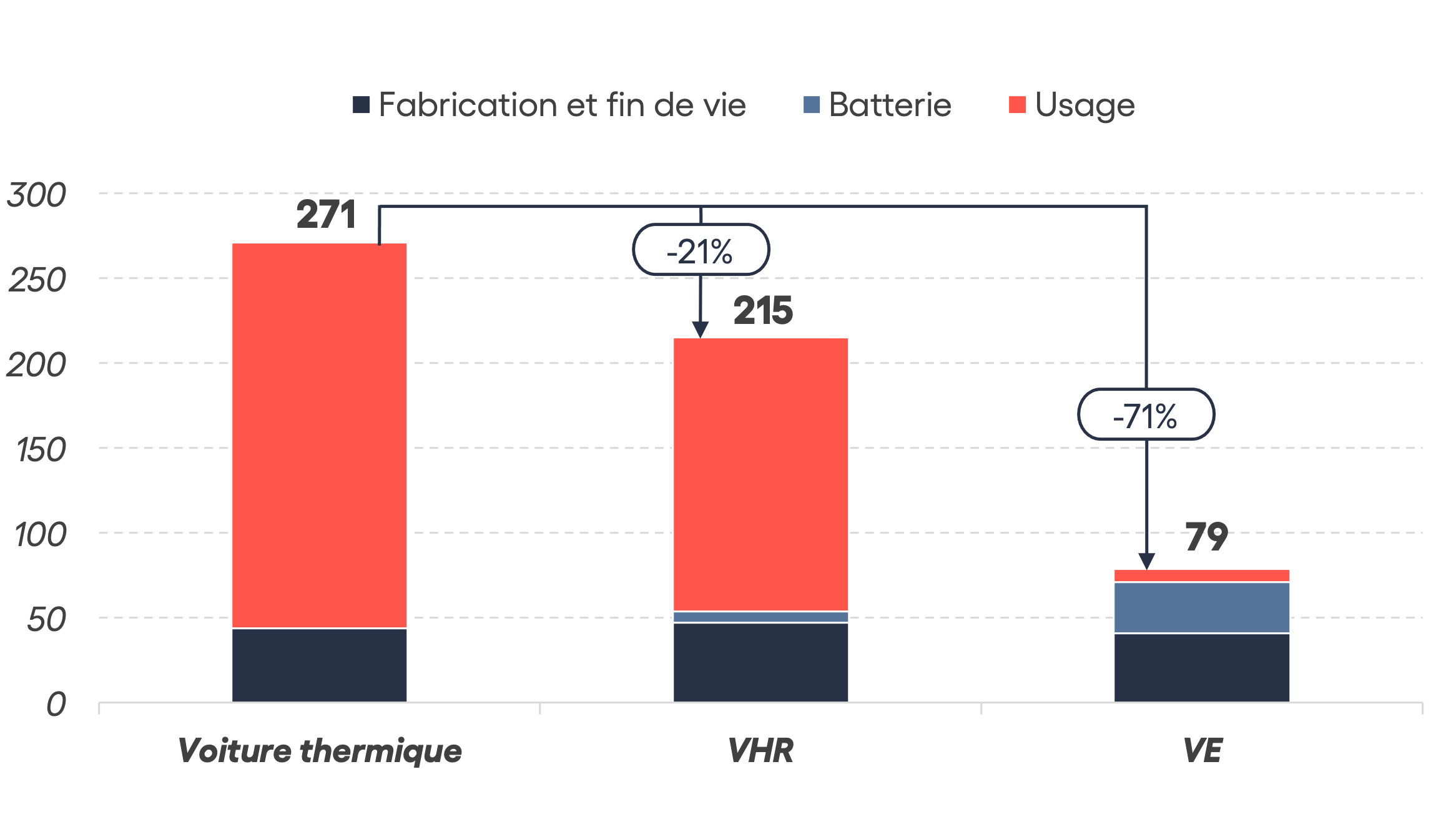
The lifecycle emission of an electric car is on average a total of 10T of C02-equivalent. Contrast that the ~40T with a fuel-powered gas or electricity generated from a coal plant. It's still a reduction-factor of 3 to 4.
Source : https://www.carbone4.com/_next/image?url=https%3A%2F%2Fcarbo...
(accounting for electricity from a Nuclear Power plant in France, VH = hybrid, VE = electric, Thermique = Combustion Engine)Granted, it would be better to have no car at all but on this front, the US is doomed.

catlikesshrimp|1 year ago
My comment is that the lifespan of a car in the US is short (5 years, 10?) so ICE vs EV more or less evens out?
Considering old cars are exported to poor countries, that is another reason in favor of ICE since EV are a no go here.
AnthonyMouse|1 year ago
The average car in the US is 12.6 years old, implying that the average car has a total lifespan of something like 25 years (because the average car will be average, i.e. currently at around half of its total lifespan).
> Considering old cars are exported to poor countries, that is another reason in favor of ICE since EV are a no go here.
I don't think anybody chooses a new car based on what kind of charging infrastructure might be available to third hand purchasers in other countries in 20 years.
reducesuffering|1 year ago