
(no title)
0_-_0 | 6 months ago
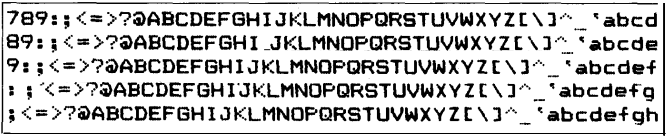
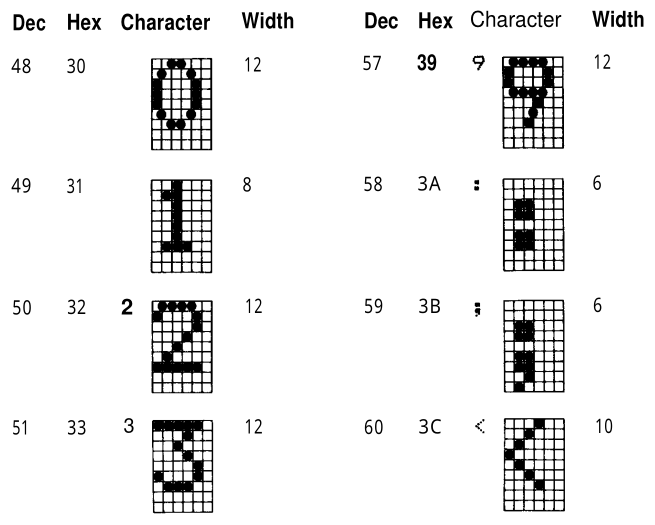
EDIT: Now I know what the issue is! Per the link above: "Like other impact printers, the Epson series of dot matrix printers used a 6x9 grid to arrange the dots for each letter. Dots could also be printed halfway between each vertical line on the grid, effectively providing a higher resolution of 12x9 for each printed character." Here's an illustration: https://technicallywewrite.com/images/2024/07/epson1.png
dphnx|6 months ago
wiredfool|6 months ago
LocalH|6 months ago
Theodores|6 months ago
I only became familiar with the later FX-80, which was the same but different. I managed to get logos printed along with neat boxes around information from the extra characters it had in PCL.
I am sure NLQ was a selling point of the FX-80 but I would like to see how good it was on the MX-80. At the time printers from Epson, HP and Canon were miracles of engineering, more advanced than the computers they were connected to.
mark-r|6 months ago
Tor3|6 months ago
I have an OKI Epson-compatible matrix printer somewhere in the man cave. The last time I printed anything on one was a Snoopy calendar generated by the Snoopy Calendar Fortran program. If I ever get the mess in the cave sorted out I'll get that printer hooked up again, to something. The 80's mini maybe..
prmoustache|6 months ago
unnah|6 months ago
manosyja|6 months ago
wiredfool|6 months ago
The Near Letter Quality was essentially double struck by making a second pass at a slight offset, with the corresponding increase in noise and print times.
There wasn't support for the printer in AppleWorks, so my first useful program was a BASIC thing that you could set the font in the printer and then reboot into AppleWorks to use either the 10 cpi, 12, 17(condensed) or the NLQ setting.
dole|6 months ago
jama211|6 months ago