
(no title)
avar | 3 months ago
That's because whoever's attempting to load an ideal 400 million micro-SD cards into one will take approximately forever carefully trying to line up even one row of them on the floor of a shipping container, before having the whole thing fall over like dominoes.
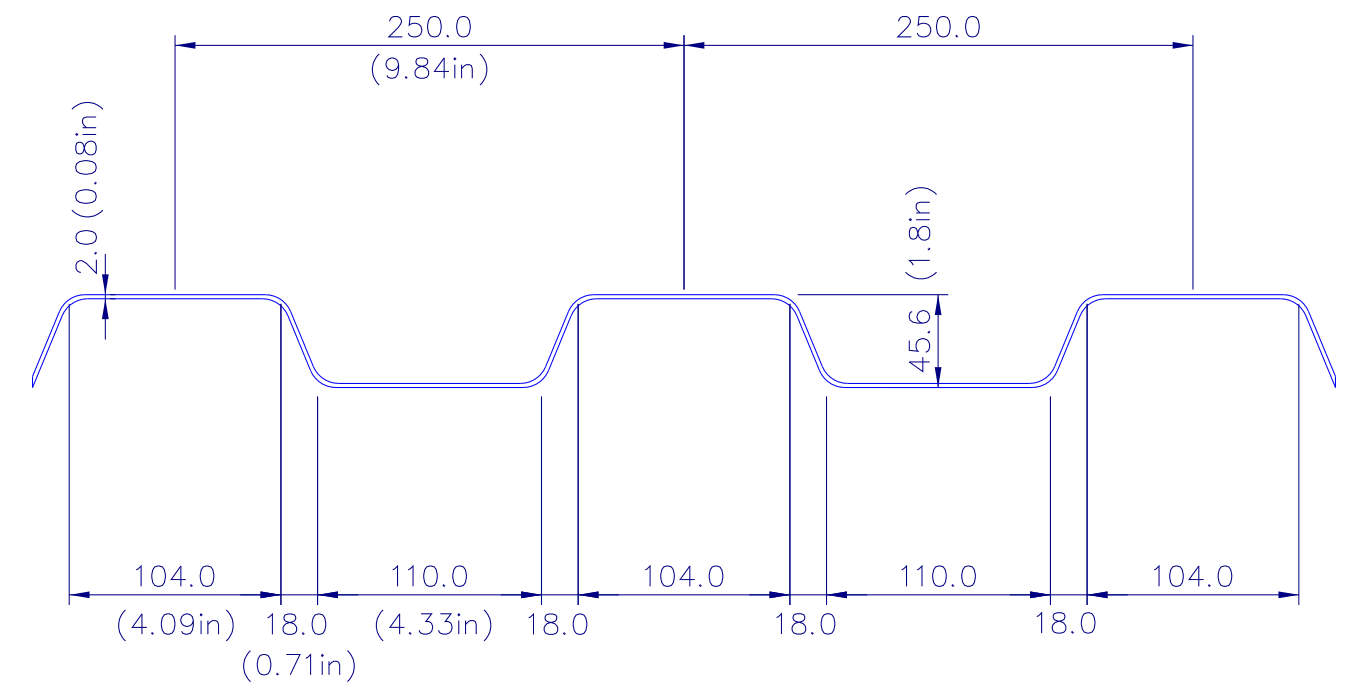
And even if they manage that, the whole thing will tumble over once they need to deal with the first row of the container's side corrugation. Nobody at the department of Spherical Cows in Vacuums thought to account for those dimensions[1] not lining up with the size of micro-SD cards.
If they do manage some approximation of this it'll take forever just to drive this down the road, let alone get the necessary permits to take the thing on the highway.
Turns out not a lot of semi truck trailers or roads are prepared to deal with a 40 ft container weighing around 100 metric tons (the weight of one packed to the brim with sand, a close approximation).
The good news is that such transportation gets more fuel efficient the longer the trip is.
The bad news is that the container will arrive mostly empty, as it's discovered that shipping container door panel gaps and road vibrations conspire to spread a steady stream of micro-SD cards behind you the entire way there.
Commuters in snowy areas held up behind the slowly moving "OVERSIZED LOAD!" with a mandatory police escort wonder if it's a trial for a new type of road salt that makes a pleasant crunchy sound as you drive over it.
Finally, an attempt to recover the remaining data fails. The sharding strategy chosen didn't account for failure due to road salt ingression into the container, cards at the bottom of the container being crushed to dust by the weight of those above, or that the leased container hadn't been thoroughly cleaned since last transporting, wait, what is that smell?
1. https://www.discovercontainers.com/wp-content/uploads/contai...
whizzter|3 months ago
That's not even mentioning Australian road trains that seem to commonly pull around 150 tons with some being up to 200 tons (The load would be slightly spread out to more containers but still one truck-load).
Still, 400 million SD-cards is still a silly experiment.
MisterTea|3 months ago
gf000|3 months ago
Also, packing it up "taking forever" is irrelevant, that's latency, not bandwidth.
avar|3 months ago
They remain unconvinced that chatGPT has told me it "should be fine", and have inquired as to whether I don't have better things to do than trying to win increasingly obscure and contrived arguments on HN. Please advise.
bigiain|3 months ago
He started with "Well, first we need to know how big our station wagon is. I hereby arbitrarily declare it to be a 1985 Volvo 240, which has 2.2 cubic metres of cargo capacity." and "I'm also going to assume that the wagon isn't really packed totally full of memory cards, such that they cascade into the front whenever you brake and will avalanche out of the tailgate when it's opened. Let's say they are packed almost to the roof of the car, but in cardboard boxes, which reduce the usable cargo capacity to a nice round two cubic metres."
The calculated "Assuming uniform and perfect stacking of objects of this volume, with zero air space, you can fit 24,242,424 of them into two cubic metres."
But he also addressed the packing problem, saying:
"In the real world there'd obviously be air spaces, even if you painstakingly stack the tiny cards in perfect layers. My size approximation, that ignores the more-than-0.5mm height of the thick end of the card, could make the perfect-layers calculation quite inaccurate. But if you're just shovelling cards into the boxes and not stacking them, though, there will be even more empty space between cards, and the thicker ends won't matter much.
To use a few words you may have to hit Wikipedia about - I know I did - a random close pack of monodisperse microSD-shaped objects will be considerably tighter than one for, say, spheres. I wouldn't be surprised if it only reduced the theoretical no-air-space density by 20%, provided you shake the boxes while you're filling them.
So let's stick with a 20% density reduction from random packing, giving 0.8 times the theoretical density of perfectly-packed cards. Or nineteen million, three hundred and ninety-three thousand, nine hundred and thirty-nine cards, in the boxes, in the station wagon."
He was writing in 2015, and settled on 16GB cards and being reasonable, getting 275 pebibytes. If we switched them to the 1TB cards mentioned upthread that'd be 17 exabytes in a 2 cubic meter stationwagon cargo area, or in a 67 cubic meter shipping container you'd get 575 exibytes. And that's the "load with a shovel and shack to pack down" number, so perhaps 720EiB if someone took that forever to carefully pack them.
Your 100 tons problem is real, it seems shipping containers (both 20 and 40 foot) seem to top out with a cargo payload of 28 tons. So let's call it "only" 161EiB shovel loads.
The font of all hallucinations and incompetent math tells me "The total amount of data on the internet is estimated to be around 40 zettabytes as of 2025, which is equivalent to 40,000 exabytes." So you'd only need 250 shipping containers or so to store a copy of the entire internet. And that's barely 1% of the capacity of a modern large cargo ship. I guess for reliability you'd use 500 shipping containers in redundant mirrored RAID1 config, each half travelling on a different ship.
Dan also noted: "Unfortunately, even if your cards and card readers could all manage 50 mebibytes per second of read and write speed, getting all of that data onto and off of the cards at each end of the wagon-trip in no more than 24 hours would require around 68,400 parallel copy operations, at each end."
That works out to 2.3 million readers for one parallel copy of one containers worth of data in one day. And 570 million for 250 container's worth.
https://web.archive.org/web/20250313181659/http://dansdata.c...
avar|3 months ago
unknown|3 months ago
[deleted]