
chrisoakman | 1 year ago | on: Tetris Is Forty Years Old
chrisoakman's comments
chrisoakman | 3 years ago | on: Turbopack, the successor to Webpack
Build tooling stability is one of the great undersold benefits of the ClojureScript ecosystem IMO.
The build process is defined by the compiler (using Google Closure tooling under the hood) and has not significantly changed since the introduction of ClojureScript in 2011.
Since all CLJS projects use the same compiler, the build process works the same everywhere, regardless of which actual build program is being used (Leiningen, shadow-cljs, etc).
chrisoakman | 3 years ago | on: Entity Resolution: The most common data science challenge
I gave a talk about Record Linking at Clojure/conj 2019: https://www.youtube.com/watch?v=rGKEOMUtJfE
I opened a PR to add it to your list
chrisoakman | 4 years ago | on: Tetris in ClojureScript
I maintain an updated fork: https://github.com/oakmac/parinfer
chrisoakman | 4 years ago | on: ClojureScript 1.10.866 Release
ClojureScript is self-hosted and thus can be compiled in a browser (see https://clojurescript.io/ for an example).
For most serious usage and projects you will want to use the JVM though.
chrisoakman | 5 years ago | on: Why Clojure? (2018)
The Parinfer core algorithm is mostly "complete", with the remaining work being various editor integrations (which can be quite tricky).
I maintain an up-to-date fork of Parinfer JS here: https://github.com/oakmac/parinfer
The Rust implementation is also popular and actively maintained: https://github.com/eraserhd/parinfer-rust
chrisoakman | 6 years ago | on: Apple releases new Covid-19 app and website based on CDC guidance
This is very similar to https://CheckForCorona.com
The team at Luminare (https://luminaremed.com) has been working with epidemiologists and doctors from Harris County and the City of Houston to build out a screening tool to help prioritize public testing. We are doing about ~10k screenings per day and ready to ramp up as more testing becomes available: https://checkforcorona.com/harris-county
We are providing this tool free for any hospital or public health organization that needs it. Please reach out if you have any connections!
chrisoakman | 7 years ago | on: Show HN: Tetris Implemented in ClojureScript
Nice work! :)
A few years ago some friends and I wrote a tetris clone to celebrate the 30th anniversary of tetris and learn ClojureScript in the process. Really fun group project.
Playable here: http://t3tr0s.com/
chrisoakman | 7 years ago | on: Parinfer – Simpler Lisp Editing
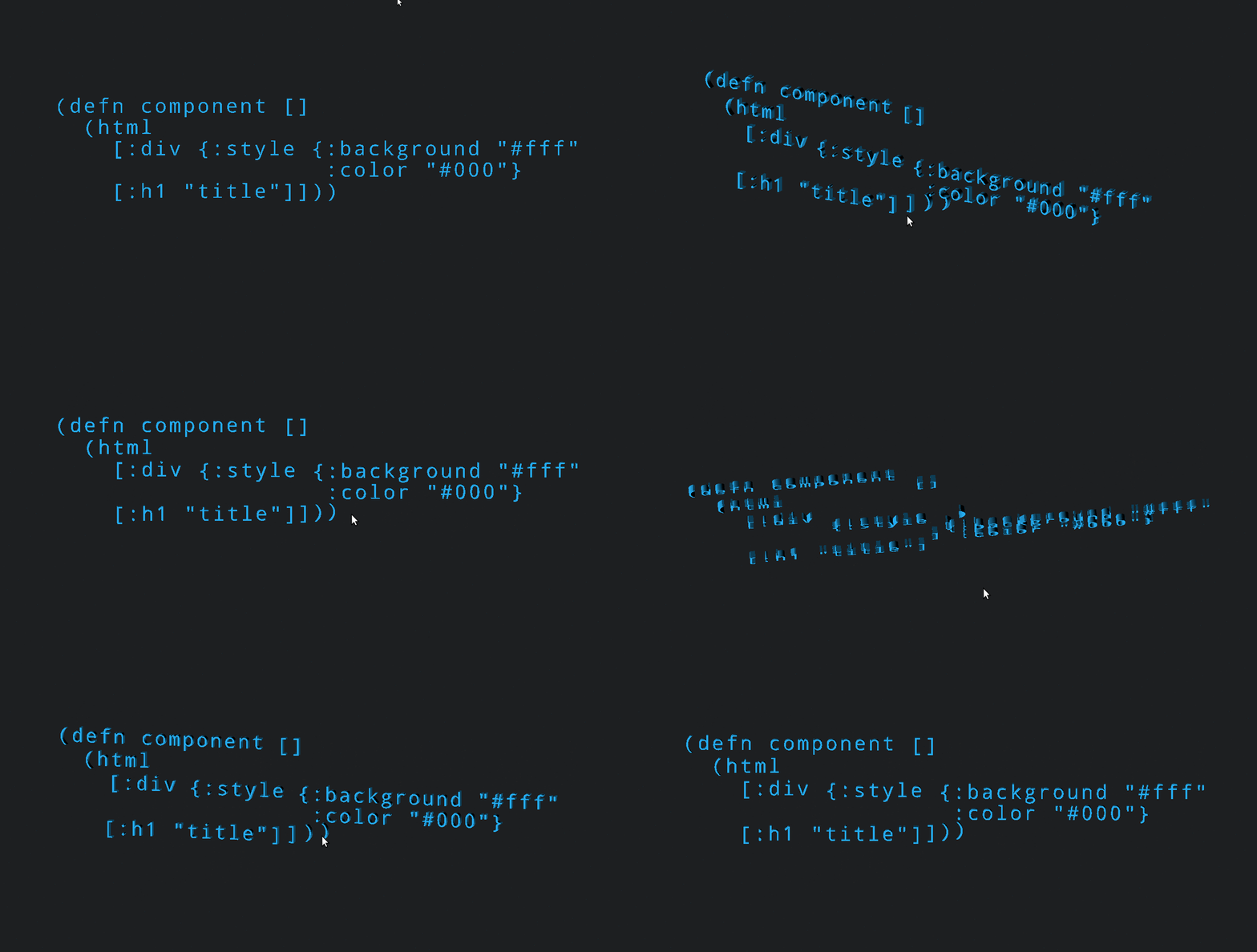
I did a quick project around this idea a while ago:

chrisoakman | 7 years ago | on: Parinfer – Simpler Lisp Editing
I'm glad you like Parinfer!
The only problem is working on a shared code base where people don't bother to indent code properly.
Parlinter was designed for this purpose. Maybe you could suggest it to your team? https://github.com/shaunlebron/parlinter
chrisoakman | 8 years ago | on: A Chess Novice Challenged Magnus Carlsen
I was casually reading this article when I noticed a familiar bug when quickly moving the pieces. A quick "Inspect" reveals they are using one of my JavaScript components :)
chrisoakman | 8 years ago | on: Why I'm Productive in Clojure (2013)
I'm sorry your original question has been downvoted. I think it's a perfectly reasonable experience report and question. I replied here: https://news.ycombinator.com/item?id=15527041
chrisoakman | 8 years ago | on: Why I'm Productive in Clojure (2013)
Hi :)
I feel your pain here and just wanted to let you know how common this is for programmers who initially try out Lisp for the first time. As others have alluded to, I promise this initial "parenthesis shock" goes away rather quickly as you read and write Lisp code. In my direct experience, I have hired junior developers straight out of a coding bootcamp who were able to pick up ClojureScript in their first week using Sublime Text with no editor extensions. In other words: you can definitely do this; it's not magic.
I would strongly encourage you to check out Parinfer [1]. Parinfer makes indentation "significant" so you never have to worry about "closing the parens". Basically, if you can handle Python or CoffeeScript indentation, you can handle Lisp. There are no hotkeys to learn and it is available in most common editors today.
For a first project I would recommend rewriting something you have already written and are familiar with. That way you can focus on just the language and not worry about the problem domain or "how to solve it". Just do a 1-to-1 port of something you've already done and compare how the two solutions are the same or different.
I'm sorry you are being downvoted and being told to "just use emacs" or "use the REPL more". IMO, these are not helpful suggestions for someone new to the language.
Good luck. You won't regret learning Clojure. One of the best things I have ever done for my career.
chrisoakman | 9 years ago | on: State of Clojure 2016 – Results and Analysis
Hi - I'm the author of the Parinfer Vimscript port.
If you've found a bug with the port, please report it here: https://github.com/oakmac/parinfer-viml/issues/new
Thanks :)
chrisoakman | 9 years ago | on: Clojure for the Brave and True (2015)
I totally agree the overhead of learning Emacs is orthogonal from learning Lisp. IMO, it's a shame that there is such a strong association between that tooling ecosystem and Lisp languages. I think it pushes a lot of newcomers away from the learning process.
One of the design goals of Parinfer[1] is to help reduce the cognitive load of Lisp syntax for newcomers. Hopefully more introductory texts adopt it as part of their environment setup.
chrisoakman | 9 years ago | on: Clojure for the Brave and True (2015)
I'm not sure when your last exposure to the ClojureScript ecosystem was, but almost nothing you mention is a problem as of 2016: debugging, hot reloading, large JS deps, etc.
I'm biased, but I think ClojureScript is the best way to use the JavaScript platform today. Awesome core library, consistent build process, best of breed tooling, persistent data structures, flexible syntax (JSX is madness compared to hiccups); I could go on.
JavaScript the platform may have it's warts, but ClojureScript is all beauty :)
chrisoakman | 9 years ago | on: The Next Five Years of ClojureScript
Check out Rum: https://github.com/tonsky/rum
chrisoakman | 10 years ago | on: The Controversial State of JavaScript Tooling
FYI - the JavaScript output of the ClojureScript compiler is designed to be compatible with the Google Closure Compiler in Advanced mode.
In other words, CLJS users don't have to do anything special to benefit from the power of Google Closure. It just works :)
chrisoakman | 10 years ago | on: State of Clojure 2015: Survey Results
Give Parinfer a try!
chrisoakman | 10 years ago | on: ClojureScript Year in Review
Thank you for the kind comment :) I'm glad you like atom-parinfer!
page 1
You can play online here: http://t3tr0s.com/
Battle Mode is especially fun with a group :) You can see everyone's board in real-time on this page: http://t3tr0s.com/#/spectate