
stevenrace | 9 years ago | on: Spin wants to bring dock-less bike sharing to the US
stevenrace's comments
stevenrace | 9 years ago | on: Toray carbon fiber to carry SpaceX's Mars ambitions
The resin has a low Tg (temp at which it turns goopy again) - somewhere around 500*F even for 'aerospace' stuff. Whereas recycling aluminum requires roughly double that temperature to begin to melt aluminum.
The carbon fiber is then chopped and used as reinforcement in other material likes plastics. SGL Group, who supplies/partners in production with BMW, even uses reclaimed and production waste in it's production process for the new 7-series.
A more technical breakdown and state of the industry can be found here: http://www.compositesworld.com/articles/recycled-carbon-fibe...
stevenrace | 9 years ago | on: Confessions of a Former Apocalypse Survival Guide Writer
"The idea for these soft bombs apparently grew out of a training accident in souther California. Military aircraft were dropping chaff - hundres of metallic strips used to confuse enemy radar. An airplane released its chaff near a power switching station and many of the strips fell onto a power switching station, blacking out a large area of Orange County."
- Weapons of Mass Casualties and Terrorism Responce Handbook - Charles Stewart MD FACEP
https://books.google.com/books?id=7ZnXZfwWwgcC&pg=PA221&lpg=...
referencing a Boston Globe article: May 4th 1999 page A27
---
I recall reading of another accident, but can't easily find the source.
stevenrace | 9 years ago | on: Confessions of a Former Apocalypse Survival Guide Writer
  >Nobody's bothered to try to figure out how to create a
  small-scale EMP without a nuclear blast
Targeting power grids 'the old fashioned way' in Desert Storm, Lockheed F-117As dropped a cluster bomb full of carbon graphite filaments (BLU-114/B). This shorted out power lines/transformers and destroyed 85% of Iraq's power grid. Later used in Serbia and accidentally in SoCal during testing [3].
---
[1] http://www.boeing.com/features/2012/10/bds-champ-10-22-12.pa...
[2] http://mil-embedded.com/3908-air-forceboeing-emp-weapon-movi...
stevenrace | 9 years ago | on: Why do they love electric cars in Norway?
To mitigate issues with cold weather, 2nd generation Nissan Leaf battery packs with the 'cold weather package' include a 'battery warmer' between banks. This is controlled via the BMS which was already monitoring temperature with some thermistors. It's a resistive element like that used in heated seats or an electric blanket.
The Tesla battery is a liquid cooled battery and thus can be warmed via coolant that is heated by the inductive heater for the HVAC. Same for the GM Volt/Bolt.
stevenrace | 10 years ago | on: MakerBot Is Outsourcing Its Brooklyn Manufacturing Jobs to China
The Mendelmax 3 & Fusematic from Makers Tool Works are built in the USA and sourced from US suppliers. The guy behind it has done more for the RepRap mechanical bits, aside from Joeseph Prusa.
The Lulzbot mentioned below was based on the Mendelmax 1.5. This line of printers moved RepRap from a threaded rod construction to extruded aluminum. Also the first to have linear rails instead of steel rod+linear bearings. The new Mendelmax3 is a mix of laser cut parts and extrusions - and has required less service than any of my printers to date.
stevenrace | 10 years ago | on: Ways David Foster Wallace's Infinite Jest Predicted the Future
While there isn't a specific section covering endnotes, they are interspersed sparingly as tonal changes in the narrator's voice. This effect is used in other readings of his works and is easy to follow.
stevenrace | 10 years ago | on: Military technology: Laser weapons get real
While that was designed in 1984, the US DoD had successfully tested laser weapons over a decade earlier:
'The first was in 1973 when the USAF shot down a winged drone at their Sandia Optical Range, New Mexico, using a carbon dioxide GDL and a gimballed telescope. Subsequently, in 1976, the US Army employed an electrically pumped HEL to destroy a number of winged and helicopter drones at the Redstone Arsenal in Alabama. The USN, in March 1978, then engaged and destroyed an Army TOW missile in flight' [1]
The first targets destroyed from an airborne platform (KC-135) were in 1979.
stevenrace | 11 years ago | on: The history of wave-powered boats
The 'Waveglider' [1] by Liquid Robotics employs a variation of this. Tethered to a buoy on the surface, the main underwater vehicle is propelled forward by the wave's upward force acting on spring loaded foils.
[1] http://liquidr.com/technology/waveglider/how-it-works.html
stevenrace | 11 years ago
FWIW the CERT ('US Computer Emergency Readiness Team') report on the 19th [1] delves a bit deeper into the exploit methods.
If you search for the MD5 hashes of the code you can find code snippets and incidents where such code was used in the past (hacking attempts at DHS, etc). Even though none of these were '0-days' or written by those with ties to NK, the attribution seems to be based on such code reuse.
stevenrace | 11 years ago | on: Usenet, updated in real time as it was thirty years ago
Alternately, there is 'cool-retro-term':
stevenrace | 11 years ago
In passing he also mentions a Tumblr posting screenshots from scans. This appears to be the page: http://mainframesproject.tumblr.com/
stevenrace | 11 years ago | on: The First 3-D Printer in Space Makes Its First Object: A Spare Part
I suspect you'd still need 'supports' added when slicing - as often it's not so much gravity, but movement from the print head that causes things to go awry.
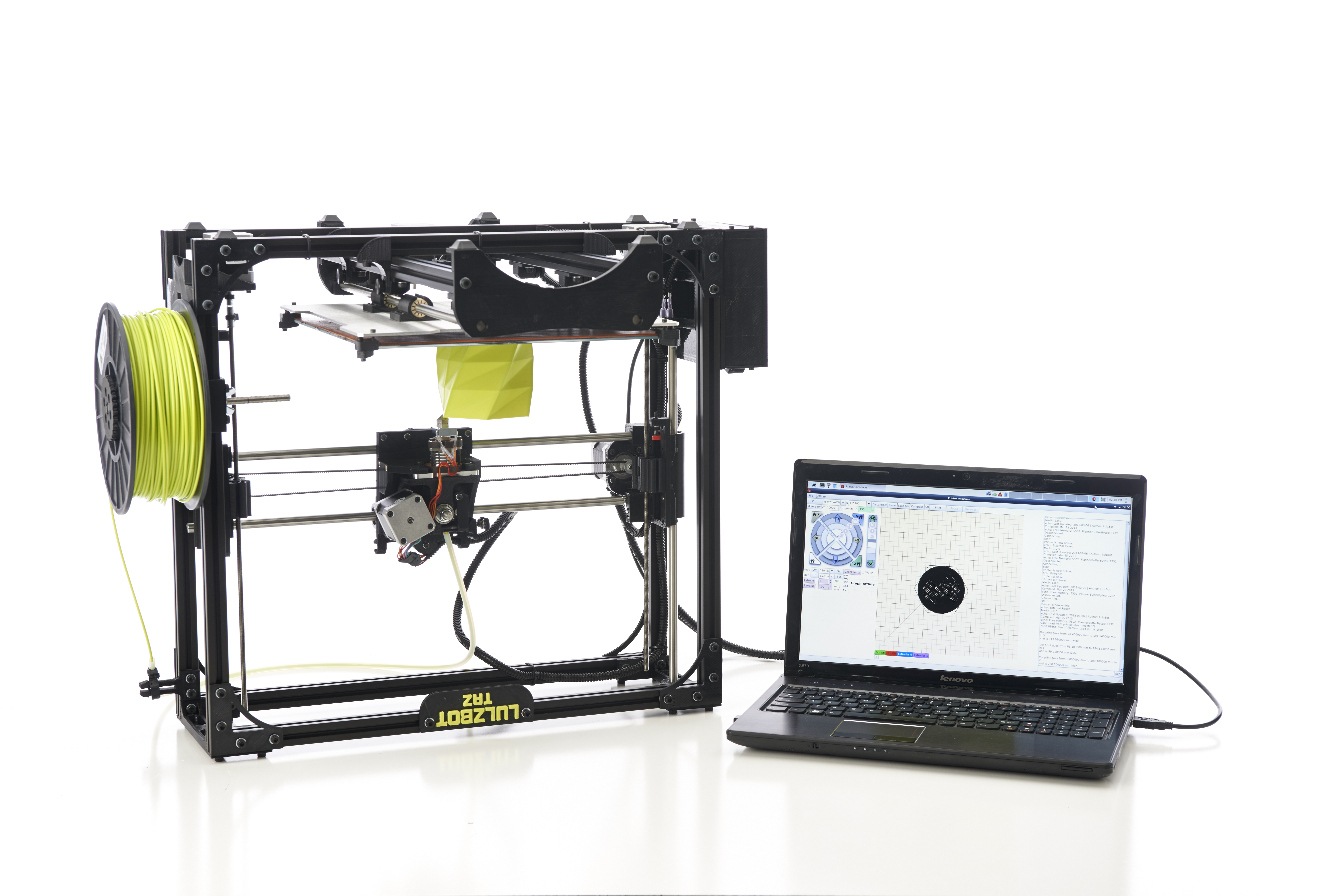
As for layer/bed adhesion. Even here on Earth, the RepRap MendelMax/Lulzbot [1] can print upside down. I imagine that's true for most of the units made from aluminum extrusions. And there have already been prints done in parabolic 'zero-g' flights using a Makerbot looking printer [2].
[1] http://download.lulzbot.com/TAZ/photos/upside_down/Lulzbot_p...
stevenrace | 11 years ago | on: New Electric Skateboard Models
Because it's fun.
To be fair, 250W on an ebike is 'not fun' or anywhere close to the legal limits in the US (750-1000W).
The happy spot seems to be 2500-5000W for most hub driven ebikes. I turned my bike down to 1000W this afternoon and couldn't imagine running anything less.
Endless-sphere [1] is the place to go if you're interested in eskateboards/ebikes with a bent towards DIY/highpower.
stevenrace | 11 years ago
Fascinating, thanks.
At what speed do you replay text->audio (ie realtime, 1.5x,2x,...)?
Lastly, if you disregard price is the braille 'refreshable display' a better experience?
stevenrace | 11 years ago | on: Salmon Cannon Fires 40 Fish a Minute
Per this comment, I checked out 'DamNation'. It was fascinating, thanks for the recommendation.
The number quoted as $9,000/'Snakeriver Sockeye' that made the 800 mile journey upstream to Redfish Lake, Idaho. In 1992, as they tell it, only one fish made it. But that apparently was the first year after the project began. Then again, only 243 made it 2011 [1]. Only ~1,500 made it back to Granite lake, which is 400 miles upstream [2]. So it's part of a larger problem in the area.
So the $40million spent equates to 222 fish per year on average.
I'm pretty sure the 'Fish Canon', however humane, can at least match the 1 fish every 36hrs rate of existing systems.
It's also worth noting the US Army Corp of Engineers ship large numbers of juvenile fish downstream on barges. Collecting them with the 'Fish Cannon' and then shipping them on barges back upstream (or furthest upstream lock) is just a budget/politics problem not one of technology.
[1] http://seattletimes.com/html/localnews/2019705443_captivefis...
[2] http://www.bpa.gov/news/newsroom/Pages/Snake-River-sockeye-c...
stevenrace | 11 years ago | on: Write Gmail in Emacs the Easy Way: gmail-message-mode
I've been using 'Mu4e' for the past few years and recommend it: http://www.djcbsoftware.nl/code/mu/mu4e.html
stevenrace | 11 years ago | on: Outsmarting the smart meter
Thanks guys.
I was familiar with Project Sanguine, but had hoped there were less ambitious public projects I had overlooked (perhaps closer to VLF which operates <30m seawater depths).
After reading about the Navy E-6B aircraft, which trails a 5km antenna behind it to communicate with subs, I had presumed modern 'submarine -> other underwater radios' were akin to large commercial fishing trawling nets - or the really long antennas were packed into hilbert curves and epoxied to the hulls or something.
Anyhow, it seems 'acoustic modems' using 'CSMA' [1] are the norm for commercial underwater ROVs (such as James Gosling's 'wavegliders' [2]).
stevenrace | 11 years ago | on: Outsmarting the smart meter
I'm really interested in learning more about underwater ULF - can you point to any keywords, papers, or milspec prefixes to read up on?
I've explored all the ISM bands - I just want to play with something even slower/longer range whilst sailing (in international waters, of course :)).
stevenrace | 11 years ago | on: Show HN: First US-based Bitcoin broker
:raises hand for invite:
Also your 'HN Profile' lacks contact info...
page 1
[1] https://www.att.com/esupport/article.html#!/wireless/KM10848...